What is it: The Lenten season
As spring approaches, so does the Christian holiday of Easter. Rejoicing in the resurrection of Jesus Christ does not start on Palm Sunday for some Christian traditions, it starts with Ash Wednesday.
Ash Wednesday functions as an observation of the start of the 40-day Lenten season. Lent traditionally ends right before the start of Easter celebrations, on Holy Thursday, while some can choose to carry the season into Easter Sunday.
Dr. Steven Hall, associate professor of pastoral ministry and executive director of the Paul L. Walker Center for Pentecostal Preaching, explains the purpose of the Lenten season.
“The missional objective of Lent is to offer Christians a seasonal, concentrated soul-health experience intended to orient or reorient their souls to the mission of Jesus: being born (Christmas), living (Gospels), dying (Good Friday), and resurrecting (Easter),” said Hall.
The history behind the official Lenten season extends back to 325 A.D., with the Council of Nicea. This is also when it was decided that Easter Sunday would be celebrated in accordance with the first full moon after the Vernal Equinox. While they did not require an observance of the Lenten season, it was established.
It was not until 601 A.D., that Pope Gregory I established the 46 days of Lent and Ash Wednesday. The practice for the fast is still 40 days, with Sundays being the day for feasting. While some modern practices of Lent have differing ideals regarding strictness, it is still a fast because of the act of putting something down or picking something up.
While it is not an outright requirement to participate in Lent for some Christian traditions, those who wish to observe should consider taking part in Ash Wednesday. Dr. Kevin Snider, associate professor of Christian ethics, shares this sentiment, focusing on the initiatory rights in human practices.
“Initiation rights are good markers to the beginning of a new season. We do this in all kinds of places in our life where we mark off the beginning of a new season… [Ash Wednesday] is about immortality. Not just about the fact that I'm a sinner, but I'm a mortal. And, of course, the great thing we look forward to is a resurrection. Christ resurrects and becomes the first fruits,” said Snider.
The significance of the ash, according to Snider, starts with the previous Palm Sunday.
“You keep the palms, burn them down to ash, mix them with oil…that makes a slurry of a certain kind.
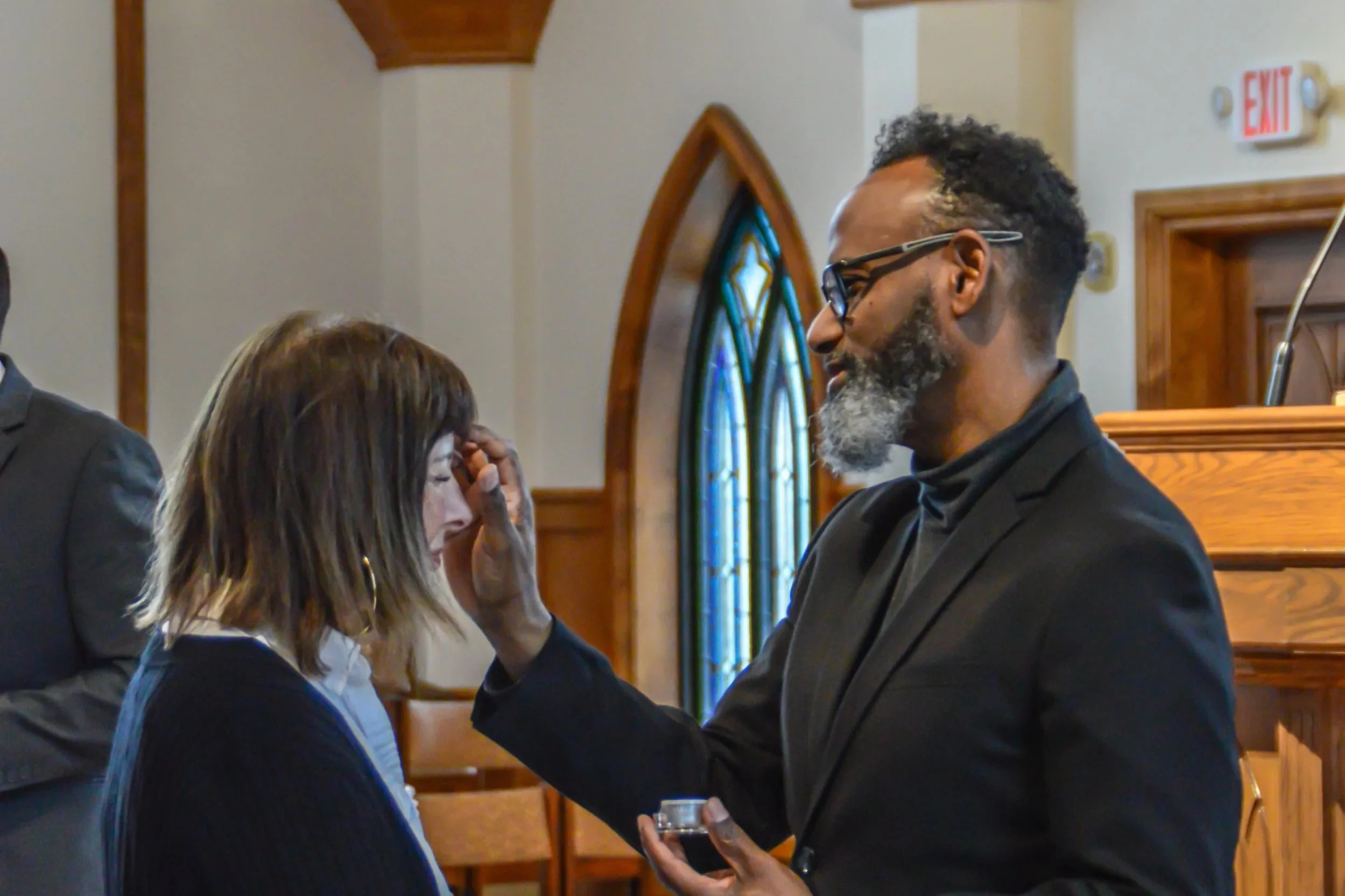
Lee University Ash Wednesday Service in the Cornerstone Chapel on February 18, 2026. Photo credit: Emme Lowder.
So it's connected to Palm Sunday, but then of course, ‘from dust to you come and to dust you return’ or ‘ash to ashes and dust to dust.’ Ashes connect to our mortality and to penances in scriptures,” said Snider.
Lee University does observe Ash Wednesday, but there is no necessary follow-up for participating in Lent. Dr. Lisa Long, executive director of “The Story Program” and professor of practical philosophy has attended a few services over the years.
“It is a very nice service, and now you can participate in our — newly named — Cornerstone Chapel… I would recommend checking it out and seeing what Lent and Ash Wednesday is about,” said Long.
Hall, Long, and Snider all assert that a part of this observation is to be upheld with community, not just on an individual level.
“I believe the best practice of Lent is both an individual and a community experience. The same as Sabbath and worship, Lent is best experienced when, as an individual and a community, it is celebrated alone and together,” said Hall.
While participation is ultimately according to personal prerogative, the Lenten season is not exclusive to a singular tradition of Christianity. If one feels led to observe Lent this season, they should prayerfully seek to do what they feel led to.
There is a community of students, faculty, and staff right here at Lee that are participating, as Ash Wednesday was observed in service this week in the Cornerstone Chapel.