Why we wear green: St. Patrick’s day history
An honorary day of feasting turned lucky holiday, St. Patrick’s day, rooted in Christian tradition, has turned secular. As children, most Americans wore green on March 17, but almost never got an explanation as to why.
The patron saint of Ireland, Saint Patrick, holds a story of redemption. Kidnapped at 16, he was taken to Ireland to be a slave. After his escape, he decided to return — this time to help the people of Ireland. Saint Patrick wanted to convert Ireland to Christianity.
Many years after he died, March 17 was the day chosen to recognize Saint Patrick. This is a fact, per PBS News, that both Catholics and Protestants agreed upon, despite their disagreements.
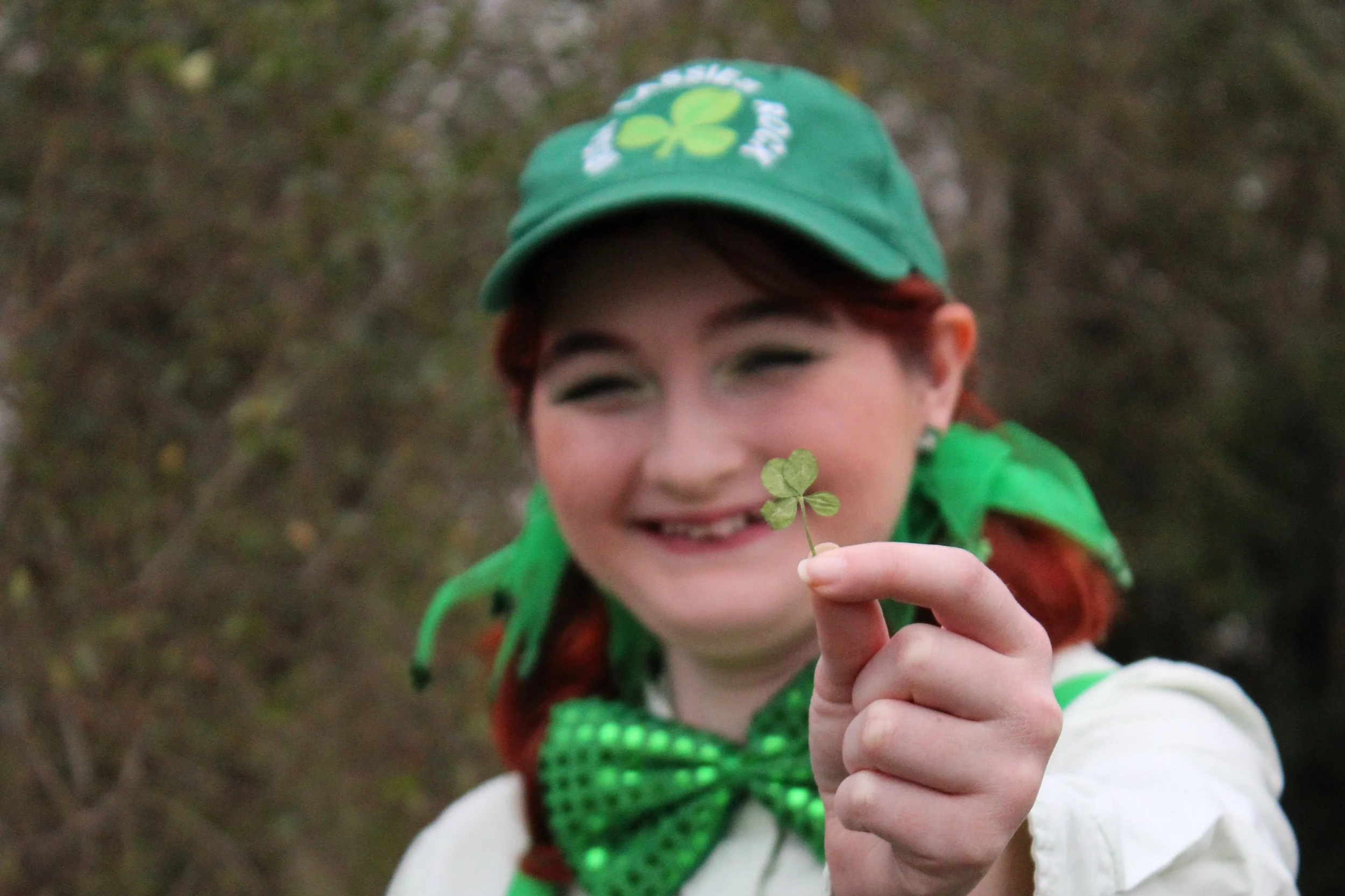
One Irish legend left behind in the wake of Saint Patrick is that the shamrock illustrates the Holy Trinity, according to Britannica. Today, the shamrock is known as the four-leaf clover. This type of clover is rare, hence lucky to find. There are a few traditional beliefs that are attributed to the luckiness of finding the clover, but it's only tie to St. Patrick’s Day is the similarity to the shamrock illustration.
The modern celebration of wearing green, rainbows, and lots of gold coins, partly comes from general Celtic lore as well as the because of the progression from a Christian holiday to a secular one.
With roots in colonial America, the shift in St. Patrick’s Day occurred when there was more of an influx of Irish immigrants onto American soil. According to History.com, after the Potato Famine in 1845 Ireland, the Irish without jobs traveled to America. Looked down on and struggling for work on a new land, those Irish Americans decided to celebrate St. Patrick’s Day as a means to recognize their roots.
According to an article published by University of Maryland, this growing group of immigrants created, at the time, its own recognized vote in politics; they coined it the “green machine,” realizing their number could be powerful. They made themselves an important swing vote, which made their St. Patrick’s Day parades an important event for politicians to attend. Harry S. Truman, 33rd president of the United States, attended a parade in New York City which became a monumental moment to a culture that felt largely prejudiced at the time.
Dr. Drew Bledsoe, professor of history, highlighted how there was a shift for the recognition of the Ireland immigrants and their subsequent culture.
“It's an interesting turnaround that today Irishness is celebrated nationally, whereas not that long ago you would have been mocked for being Irish or discriminated against” Bledsoe said.
The secularization of St. Patrick’s Day is not without the consent of the originating culture itself, however, Bledsoe points out that this is a common theme with American holidays.
“In a lot of ways our big national holidays in the United States, many of them originated as religious holidays. The term holiday itself is Holy Day. So, whether it's Christmas or Easter [etc.], over the years they often become commercialized and secularized,” Bledsoe said.
While our celebration of Irish culture is different from the original feast in honor of St. Patrick, it has become a benchmark for celebrating a group of overlooked immigrants in America. In most cases, it looks as though it is an excuse for drunkenness, but it should be seen as the celebration it is. And, as for the leprachans? They are an aspect picked up simply through Celtic folktales; this tradition was linked together with the celebration of Irish culture. This has made it, “one of the most enduring symbols associated with the nation,” according to National Geographic.
So, wearing green? This acknowledgement of Irish pride and heritage has rendered itself extremely recognisable. This year, wear your green boldly, finally knowing some of the roots behind the celebration associated with the “Emerald Isle.”